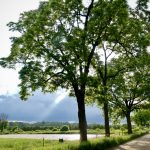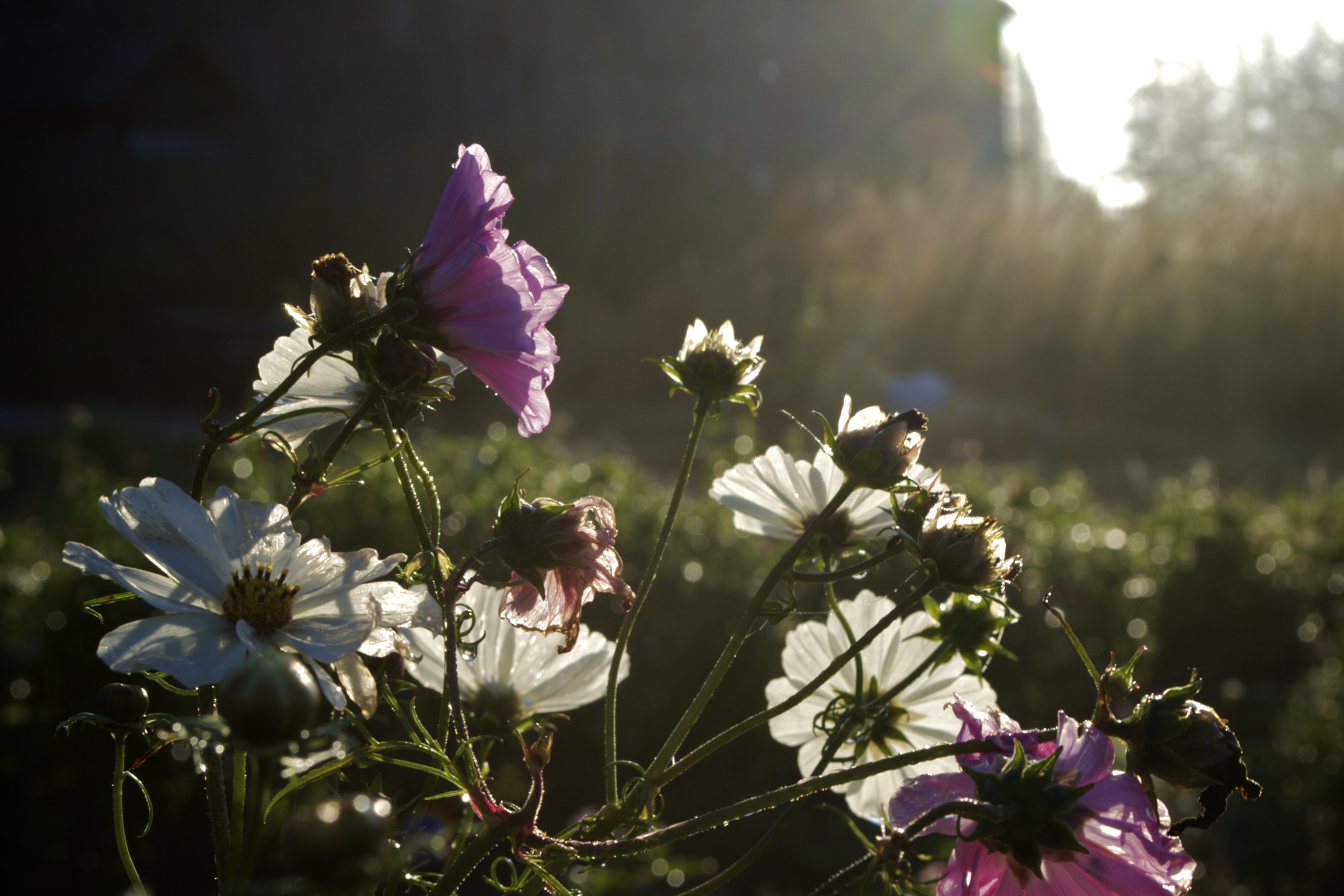
Each year, the Season of Creation invites us to pause and notice how our lives are woven together with the natural world. At Ignatius Jesuit Centre, this season feels especially alive across our land, farm, and conservation projects. It is also present in the quieter corners of our community spaces, where simple encounters with plants, trees, and gardens open us to wonder and care.
To mark this year’s Season of Creation, we’re sharing a series of guest reflections from friends and partners who bring unique perspectives on what it means to live in right relationship with creation.
We’re honoured to begin with Sister Madeleine Gregg, fcJ, who reflects on her relationship with the plants in the Orchard Park courtyard. Her story is a reminder that care for creation often begins right where we are—through noticing, tending, and appreciating the life around us.
by Sister Madeleine Gregg, fcJ
The Season of Creation, inaugurated by the late Pope Francis in 2019, is a special time of the year for Catholics to focus their prayer and reflection on the gift of creation and their relationship to it. Our current Pope Leo has recently promulgated a Mass for the Care of Creation for use during this season. These efforts support the ecological conversion needed today: “Only a contemplative gaze can change our relationship with creation and bring us out of the ecological crisis brought on by the breakdown of our relationship with God, with our neighbors, and with the earth that is the effect of sin” (Laudato Si, 66).
As an offering for this Season of Creation, I share with you part of my experience of responding to the changes happening at the Ignatius Jesuit Centre. Being one of the last residents of the Orchard Park building, in the spring of 2025 I was grieving the fate of all the trees and plants in the courtyard that had so gladdened my heart over the past three years. I realized that, in the same way I have relationships with other people, I had relationships with the non-human and even non-living parts of creation found in the courtyard. Those courtyard plants had become part of my life: as I had become conscious of them, they had become characters with whom I interacted and to whom I responded. Objects in the courtyard had become subjects for me. This is part of what Thomas Berry was talking about when he said that the universe is not a collection of objects, but a communion of subjects. It furthered my understanding of why we need to learn to listen to the land.
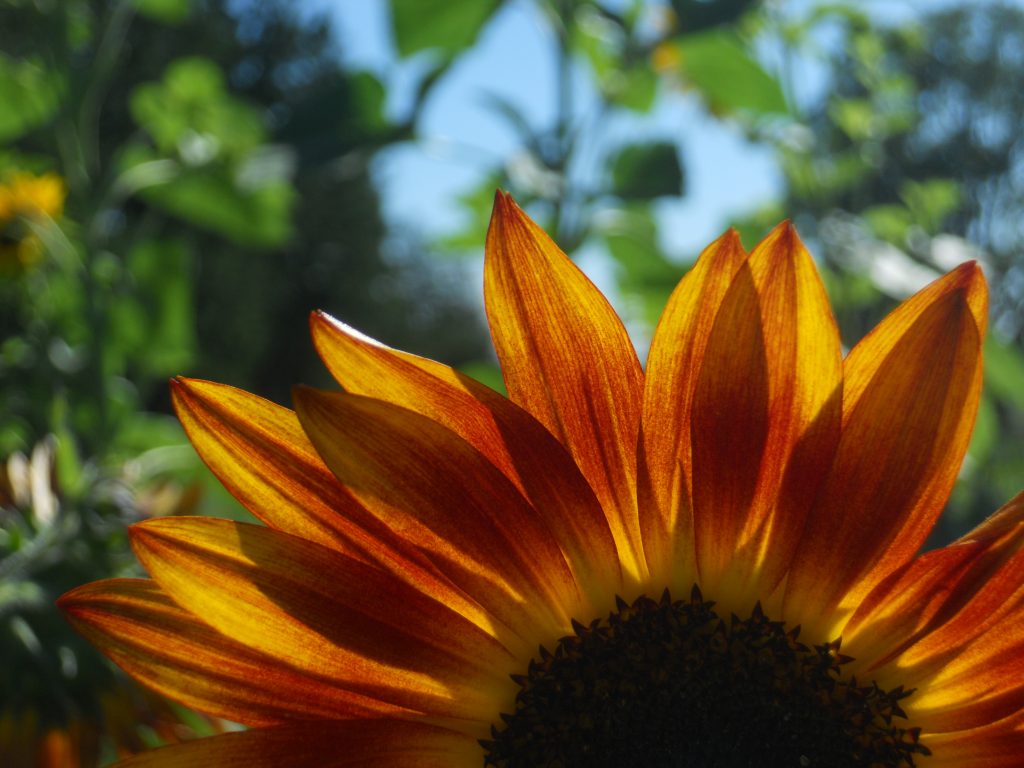
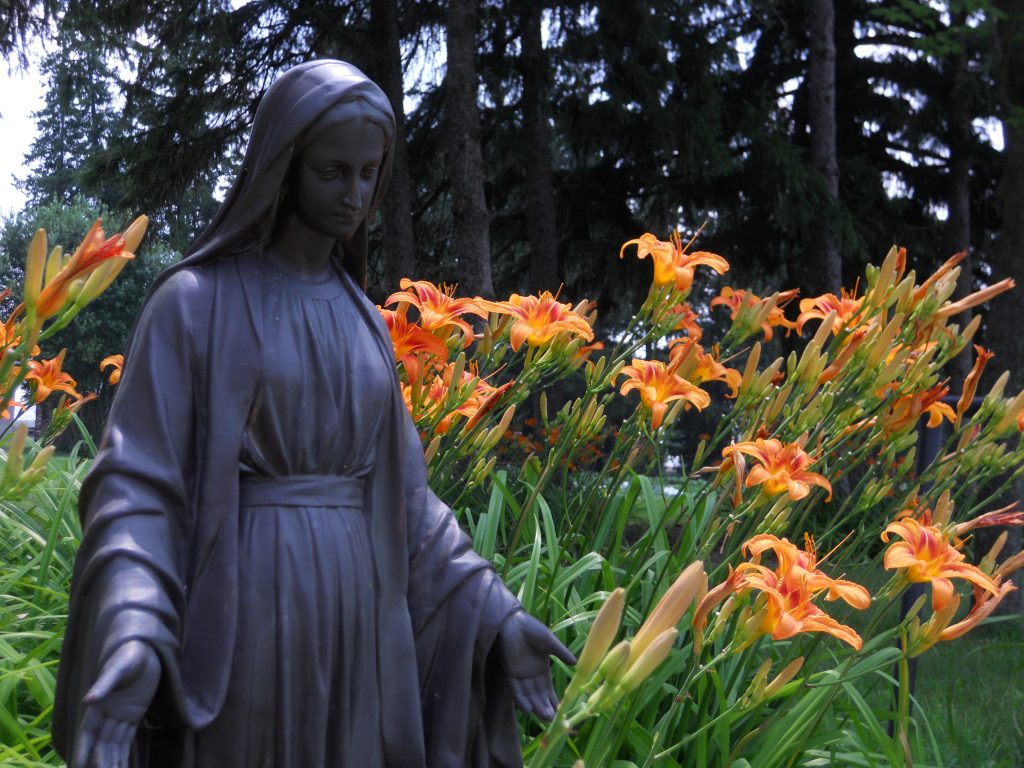
The rocks, the water, the trees, the soil—all have an impact on the people and the animals that move over and through the land. When we learn to pay attention to them, to identify them, to engage with them in a personal way, they change our thinking and even our theology. The character of the land teaches us about the character of God, and biomes enrich our lives in ways that are a revelation to us.
I had benefited from the abundance of courtyard herbs, flowers, and fruits, as well as from the beauty of the place. I knew that, with the closing of the building at the end of June 2025 and its eventual demolition, the trees and plants were doomed. I also knew that Loyola House, the retreat centre, needed to pay its bills through the end of the year, and that we weren’t generating enough income to cover our expenses.
Having been drawn into the beauty of the wilderness garden in the courtyard, most of which comes from perennial plants, I had the thought that perhaps lots of people would like to have plants from that much-loved space to put in their own gardens. Furthermore, I knew that a plant sale would be happening in May. These various sources of inspiration came together in the idea of starting to “harvest” plants from the courtyard to sell at the sale.
Greg Kennedy, then the Executive Director of IJC, gave me permission to start the harvest, and Heather Lekx, the farm manager, agreed we could offer the perennials for sale in May and offered the support of the farm community. Fortunately, over the years many hundreds of plastic pots had accumulated in one corner of the courtyard, and the farm team had sources of potting soil available, so harvesting plants wouldn’t cost IJC anything extra but my time and energy. After a day mostly sitting in meetings, prayer, or spiritual direction, I was happy to spend 30–45 minutes each day digging and potting up. A complicating factor was that I was still recovering from serious abdominal surgery and was unable to lift heavy things, but I worked away at the task, getting plants to a bare-root condition, which I could lift, and potting them up in a mixture of garden soil from the courtyard and potting soil from the farm.
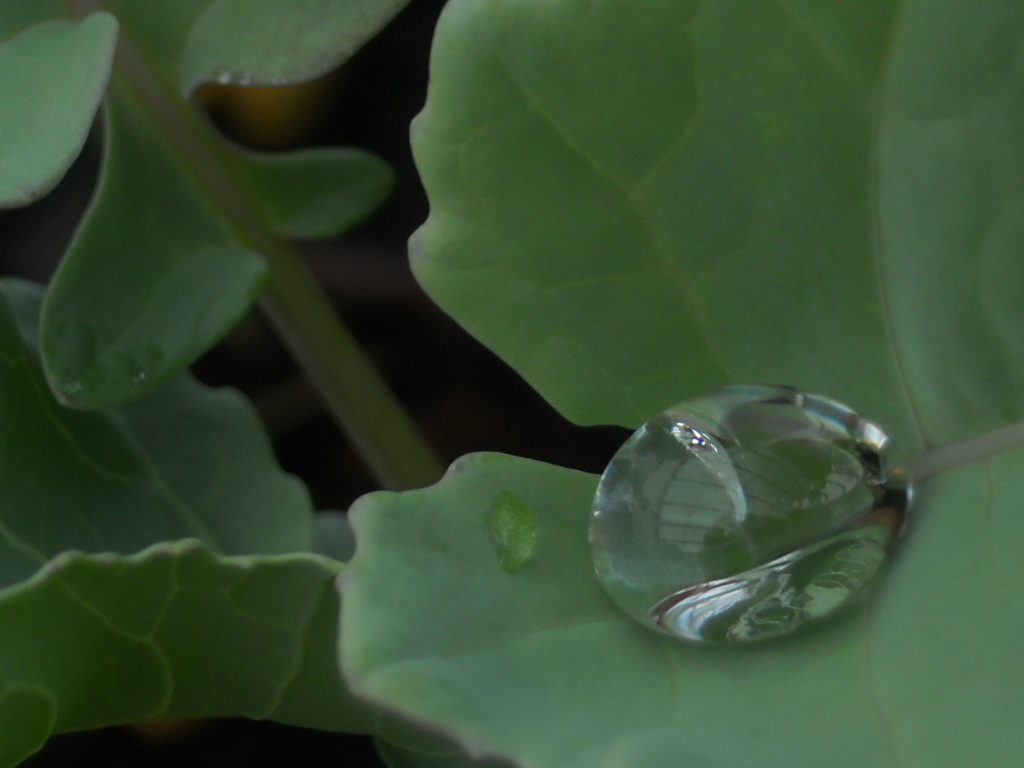
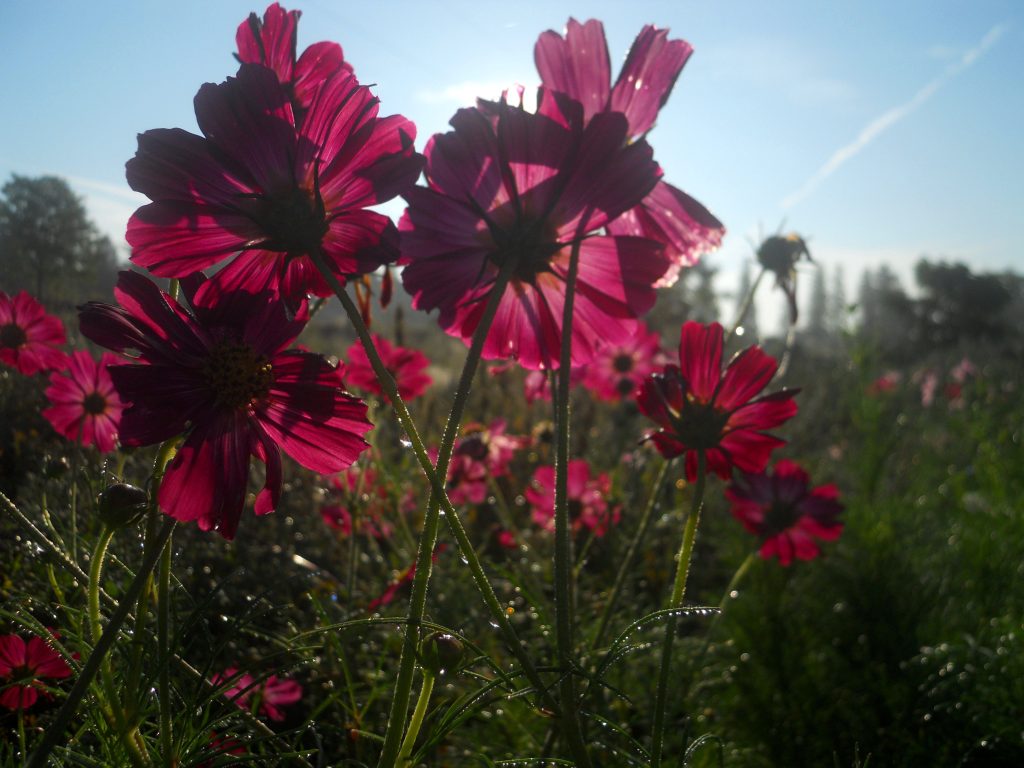
Initially, I was not systematic about the process: I just dug the plants that I found particularly pretty, or that I knew were less common, or that I knew had high value. So much of what was in the courtyard had been planted many, many years ago and had consequently spread out from where they had initially been placed. As I interacted with the various sections of the courtyard, I learned so much about how particular species grew, reproduced, and spread. For example, one pink peony, carefully supported by a tomato cage, had expanded into a large patch of peonies, covering perhaps two square metres of ground. After digging and potting up about 30 good-sized plants, with between 8–10 “eyes,” there were still many in the patch. This is not an isolated case: many long-time residents of the courtyard witnessed to the abundant life that mysteriously appears in healthy soil. One huge pink bleeding heart turned into eight potted plants. The big thornless blackberry bush produced four well-established “daughters” that went to delighted buyers. And so the story of abundance went.
As I potted them up, I placed the plants on the sidewalk in the middle of the courtyard. There were small pots, medium pots, and large pots. Soon, I had quite a collection. I watered them frequently, with the help of lots of people who began to volunteer. In addition to watering, some people potted up plants. Others poked around in the “jungle” and found statues, objets d’art, bird baths, clever signage, and all kinds of interesting things. Still others dug plants for me to pot up. A lot was accomplished during these weekly work sessions. As the weeks went by, a kind of “save-the-plants” community grew up, something “very consistent with the history of this property and with the goals of this property,” in the words of Jim Profit from an interview in 2007.
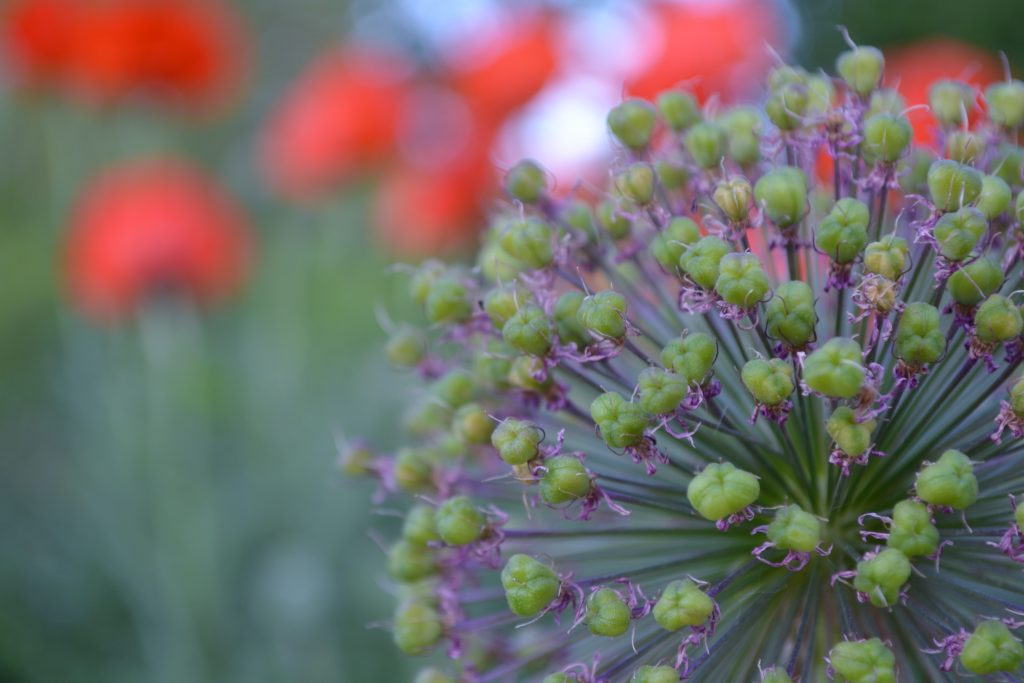
Even before the plant sale, people who worked in Orchard Park and parents of the children who attended Orchard Park schools were coming to the courtyard as I was working and asking to purchase particular plants. What we sold we priced well below market value, and people were very happy to have souvenirs of the courtyard and even plants they had long wished they could have in their gardens at such reasonable prices. Some people had new garden spaces and needed lots of plants. It was a joy to provide them.
The farm community allowed me to use collapsible cases they had in previous years used in harvesting vegetables to organize the plants for the sale. Farm community members came with a big wagon to transport the large number of plants over to the sale area the day before the sale happened. On the day of the sale, I thoroughly enjoyed interacting with people who came to check out what we had on offer. Naturally, most of the people were experienced gardeners, and so many of the more common plants didn’t sell. Some requested “appointments” to visit the courtyard and dig plants themselves. It was fine that not everything sold, because there were—and are—so many empty spaces in the gardens on this property that the harvest from Orchard Park has become a source of plants for our own gardens. A second plant sale in June provided additional opportunities for plants to find new homes.
So, what has this project meant? How does it relate to the Season of Creation? Financially, the project contributed to Loyola House coffers and brought together lots of volunteers. It also tells the story of one pathway towards healing when the sadness of change weighs heavy, when the loss of, and grief for, a beloved garden overwhelms, and the sense of belonging in place begins to crack. Ultimately, the process created the potential for me, and others, to experience peace in the midst of healing the grief from the decision to close Orchard Park and Loyola House. It has made space for new dreams, new hopes, new projects on this land, so long dedicated to helping people find God in all things.
This post is part of the Season of Creation celebration at Ignatius Jesuit Centre!
The Season of Creation is an annual, global ecumenical celebration of prayer and action to protect the environment. From September 1 to October 4, Christians around the world unite to reflect on our relationship with the Creator and all creation, to renew our commitment to care for the Earth, and to take steps toward ecological justice. This year’s theme is Peace with Creation, inviting us to restore harmony with the natural world through justice, reconciliation, and active stewardship. To find out more about Season of Creation, you can visit https://seasonofcreation.org