The fourth in series of blog posts for Lent from Sr. Madeleine Gregg, fcJ
An ecospiritual perspective of Lent invites us to more closely examine our relationship with THINGS and make changes in our use of them. Think for just a moment about the dominant system of production in our world today: we spend enormous time and energy digging resources out of the ground or chopping them down or harvesting them in one way or another; then we use more time and energy to transport them to other locations on the Earth’s surface; then we use yet more time and energy to transform them in all kinds of ways, producing all kinds of things, many of which are not long-lasting; then we use more time and energy to transport the things to warehouses and stores from which we buy them; and, in many cases, we then end up discarding them and sending them to yet another location on the Earth’s surface, which we call a dump. We refer to “throwing things away”—but there IS no AWAY! Everything stays here on Earth…. We can hope that maybe in 5,000 years, if humans are still around, they will learn to mine the garbage dumps for useful materials from which to build future objects…..
Instead of focusing our time and attention on THINGS, an eco spiritual approach to Lent challenges us to use our time and energy and attention to remedy the suffering of people and animals and plants and ecosystems. The suffering is enormous; 40 days is not enough time to solve the various problems that lead to the suffering. But we can start. And, always ready to help us is our dear friend in heaven, St. Ignatius of Loyola.
St. Ignatius suggested in the Spiritual Exercises that each of us reviews, with a cry of wonder and deep emotion, all the creatures who have permitted us to live and who have sustained us in life. By “creatures”, St. Ignatius did not mean only living beings, but everything that is made of matter—the visible stuff—and even everything that is invisible, such gravity and photosynthesis. Ignatius wanted us to rejoice that the galaxies, mountains, rivers, currents of water and air…..and on and on and on!—all of these creatures sustain our lives. Despite the ways each of us has abused creation, despite all our sinfulness, the heavens, the sun, moon, stars and the elements: the fruits and trees and plants; the birds, fishes, and other animals have continued to be at our service. “How is it?” Ignatius suggests that we will want to exclaim, “that the earth did not open to swallow me up and create new hells in which I should be tormented forever!”
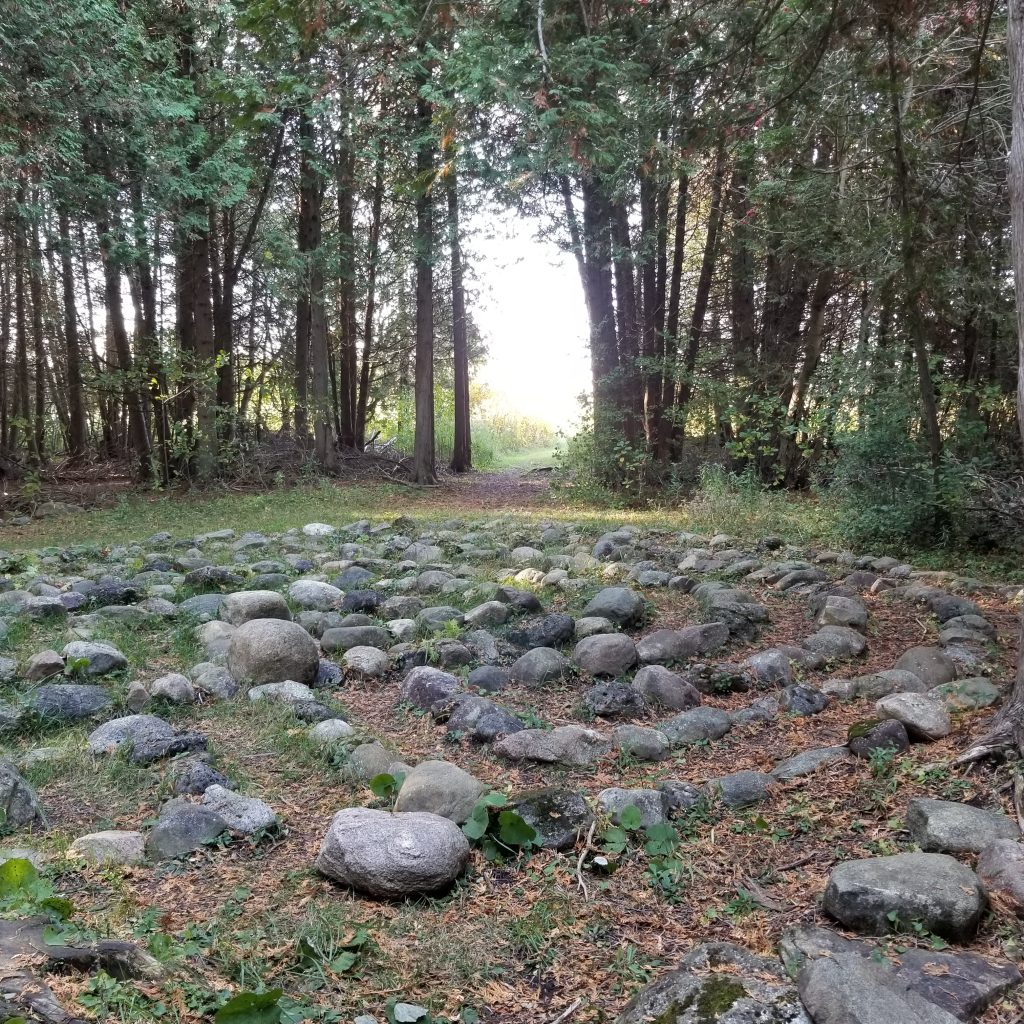
When we look at what’s happening in the news and on the planet as a whole, we readily see that we are creating ‘new hells’. In our ravaging of the earth and in our lack of respect and concern for the rest of humanity and for the other-than human creatures with which we live and move and have our being, it is easy to see the suffering. Denise Levertov, in her poem Benedictus, having spoken of the Spirit’s presence in woodgrain, windripple, and crystal, in petal, leaf, moss and moon, then adds, ‘But what of the deft infliction upon the earth, upon the innocent, of hell by human hands?’ Lent is a time to recognize the various hells we have contributed to and take steps, even if only baby steps, toward a new way of living and being in the world.
Adrienne Rich wrote, “My heart is moved by all I cannot save: so much has been destroyed. I have to cast my lot with those who age after age, perversely, with no extraordinary power, reconstitute the world.” You might want to listen to Carolyn McDade’s moving rendering of this text in song: https://www.youtube.com/watch?v=87TjUVLnHD0
There have been and continue to be people who resist the easy way of falling in with what is popular and convenient, who “perversely” move in counter-cultural ways to “reconstitute the world”. Will you be one of them?